La Liga Mexicana de Béisbol (Spanish: Liga Mexicana de Béisbol, o LMB, lit. 'Mexican Baseball League'), officially known as the Mexican Baseball League Banorte for sponsorship reasons, is a professional baseball league in Mexico.
The league has 20 teams organized in two divisions, North and South.
Teams play 114 games each season.
Five teams in each division advance to a four-round postseason tournament that culminates in the Serie del Rey, a best-of-seven championship series between the two division champions.
Founded in 1925, LMB grew substantially in the immediate post-World War II era thanks to the efforts of Jorge Pasquel, who greatly increased the quality and visibility of the league by luring players from Major League Baseball (MLB).
The Mexican Baseball League is the ninth-wealthiest professional sports league by revenue in North America, and the second-wealthiest baseball league in the western hemisphere, behind only Major League Baseball.
La comparación entre la liga mexicana de beisbol y la liga estadounidense suele partir de una diferencia central: la MLB es la referencia mayor del béisbol profesional en el hemisferio, mientras que la LMB ha construido una identidad propia, con una larga tradición, fuerte presencia regional y una historia marcada por expansión, cambios de estructura y competencia con el béisbol organizado de Estados Unidos.
From 1925 to the 1960s, the league consisted of about six teams each season.
The league expanded to eight teams in the 1960s.
In 1970, after the circuit had grown to 10 teams, the league was split geographically for the first time.
In 1979, the Mexican Central League was absorbed into the expanded Liga Mexicana de Beisbol (Mexican Baseball League).
The newly expanded league featured a 20-team circuit with four divisions.
Although there is a stable core of teams in the league, it is not unusual for clubs to relocate.
Often, new incarnations of the teams come about through new owners.
Teams also cease after unsatisfactory results or bankruptcy.
Since its foundation in 1925, more than 90 teams have passed through the Mexican League, and the only organizations that have remained since their inception are the Sultanes de Monterrey (1939), Diablos Rojos del Mexico (1940), Tigres de Quintana Roo (1955), Saraperos de Saltillo (1970), and Piratas de Campeche (1980).
Some sources claim that baseball reached Mexican soil because of the US military forces that participated in the US-Mexico War between 1846 and 1848.
The last decades of the nineteenth century were beneficial to the baseball boom, while American companies were investing in various sectors of the Mexican economy and their employees were broadcasting the game.
The origin of baseball in Mexico City, the capital, dates back to 1887 with the birth of the "Mexican Club", which is undoubtedly the oldest team of the republic.
As early as 1925, Mexicans' interest in baseball was such that sports journalist Alejandro Aguilar Reyes and his friend baseball player Ernesto Carmona founded the Mexican League.
They had to overcome many difficult obstacles, especially when, on May 26, the rival Mexican Association prepared a "coup" against them, but managed to rebuff it.
During the so-called "first stage of the Mexican League," the league attracted several well renowned players from Cuba and the Negro leagues.
Cuban ballplayers Martín Dihigo, Lázaro Salazar, Brujo Rossell, and Agustín Bejerano all played in Mexico at some point.
The era was mostly dominated by the teams in the central areas of the country, in and around Mexico City.
The first champions were Regimiento 74, a team from Puebla.
After that, the Championship was only won by teams from the capital city for a decade, with Agrario de Mexico and Tigres de Comintra dominating with two titles each.
Because of the late foundation of the league, there never was a "dead-ball" era, which helped enhance the sport's popularity quickly.
These moves were motivated by businessman Jorge Pasquel investing more money to raise the profile of the Mexican League and offering contracts which were in some cases higher than American major league contracts.
1949: Landmark ruling of Gardella v. Supreme Court case Federal Baseball Club of Baltimore v. The ruling went untested until the Mexican League was formed.
Players who went to play in the Mexican League were blacklisted from Major League Baseball (MLB).
One such player, Danny Gardella, was blacklisted because MLB claimed he had violated the reserve clause.
During 1948, Gardella brought a claim against Commissioner of Baseball Happy Chandler, the National League and American League, as well as their presidents (Ford Frick and Will Harridge, respectively).
Gardella charged that they were engaged in interstate commerce because the defendants had made contracts with radio broadcasting and television companies that sent narratives or moving pictures of the games across state lines.
In 1949, Gardella won a major appeal against baseball's reserve clause in the federal courts.
For most of its existence, the league consisted of six to eight teams.
During its first few decades most of the league's teams played around Mexico City and the Gulf Coast.
The southernmost team being Veracruz, while the northernmost team being Tampico.
Most of Mexico City's teams disappeared in the late 1930s, and were replaced by teams all around the country.
It wasn't until the 1940s that the League first reached the northern part of the country with the introduction of the Sultanes de Monterrey.
Teams in Nuevo Laredo and Torreon soon followed.
The west coast first had a team in 1949 with the emergence of the Charros de Jalisco.
It still was a difficult region to gain popularity given the presence of the Mexican Pacific League, an important winter league in the northwest of the country.
The emergence of teams in the north was key in expanding the league's popularity.
The north followed baseball closely, because of various aspects that all helped its teams thrive and has been the home of the most consistent teams in the league, with the Saraperos, Sultanes and Acereros not having stopped play in over 40 years.
For the Sultanes it even resulted in a Minor League partnership with the Dodgers, and played a major role in the league achieving AAA status with the Minor Leagues.
This achievement should be attributed mainly to Anuar Canavati, who is considered one of the greatest Mexican baseball executives along Peralta and Harp.
Southern Mexico has also been a bastion of baseball, with both the Tabasco and Campeche teams enjoying consistent attendance due to the sport's popularity.
The league first expanded southward with the introduction of the Olmecas de Tabasco in 1975, which was followed by the Piratas de Campeche in 1980, and the Leones de Yucatán in 1979, after a couple of previous unsuccessful attempts.
In 1979, the Mexican Central League was absorbed into the expanded LMB.
The newly expanded league featured a 20-team circuit with four divisions.
For the 1970 season, teams were divided into geographic zones to lower travel costs, however it was not until three years later that the league introduced a playoff system for the first time.
In 1973 the first of what is now called the Serie del Rey was held.
The members of each zone have changed frequently as teams have come and gone (particularly for those teams in a central location), but each zone has maintained a core of the northernmost and southernmost teams.
The league has found the stability it lacked in the 90s, and has managed to sustain 16 teams for almost two decades, although some teams have relocated, and attendance has been inconsistent, though has rebounded in the latter part of the 2010s with the opening of new ballparks and greater stability.
In 2023, the league announced that it would introduce a salary cap starting in the 2024 season, in an effort to ensure competitive balance.
The league also approved a measure requiring each of its teams to have a minimum of 18 Mexican-born players on their 38-man rosters.
The current LMB regular season, consisting of 120 games per team, typically begins in late March or early April.
Each team's schedule is typically organized into three-game series.
Postponed games or continuations of suspended games can result in an ad hoc one-game or five-game series.
A team's series are organized into homestands and road trips that group multiple series together.
Teams generally play games five to six days per week, commonly having Monday as an off day.
Frequently, games are scheduled at night, though Sunday games can be played during the afternoon.
In mid-to-late July, just after the midway point of the season, the LMB All-Star Game is held during a four-day break from the regular-season schedule.
The All-Star Game features a team of players from the North Zone, led by the manager of the previous North Serie del Rey team, and a team of players from the South Zone, similarly managed, in an exhibition game.
It has been held consistently since 1942 and from that year up until 1971 a team of foreign players battled it out against a team of Mexicans.
The first all-star game took place on August 29, 1939, in the since-demolished Delta Park of Mexico City, in a game between the selections of Ernesto Carmona and Manuel Oliveros.
When the regular season ends at the end of August, between eight and ten teams enter the postseason playoffs.
The top four finishers in each zone automatically qualify, however if the fifth place team in a zone finishes three or fewer games back of the fourth place team, that fifth-place team qualifies as a wild card and plays the fourth place team in a single game playoff.
Within each zone the first seed (the team with the best record) will face the fourth seed on the First Playoff, while the second and third seeds face each other.
Similar to MLB, the Mexican League has had issues with performance-enhancing drugs by several players.
Allegedly, the league allows players to pay a fine equivalent to US$5,000, without suspension to make the positive test "disappear".
This has caused controversy among the fans and media who have called for the firing of league president Javier Salinas.
Sky Sports, AYM sports, and TVC Deportes broadcast games from the LMB.
La Liga Mexicana de Béisbol has an agreement with Cadena RASA, through which the radio network has the exclusive national radio broadcast rights, including the All-Star Game and the Serie del Rey, as well as any other baseball event of national relevance that is presented.
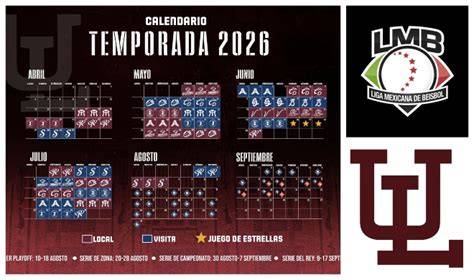
Si se observa la liga mexicana de beisbol vs liga estadounidense desde el calendario, la LMB se distingue por una temporada regular de 120 juegos por equipo, series de tres partidos y una pausa específica para el Juego de Estrellas; en la MLB, el modelo tradicional es distinto por duración, ritmo y tamaño del calendario.
| Aspecto | Liga Mexicana de Béisbol | Liga estadounidense |
|---|---|---|
| Fundación | 1925 | Major League Baseball (MLB) |
| Equipos | 20 teams | Major League Baseball (MLB) |
| Divisiones | North and South | Major League Baseball (MLB) |
| Juegos por temporada | 120 games per team | Major League Baseball (MLB) |
| Postemporada | four-round postseason tournament; Serie del Rey | Major League Baseball (MLB) |
| Valor económico | ninth-wealthiest in North America; second-wealthiest in the western hemisphere | behind only Major League Baseball |
La relación histórica entre ambas ligas no ha sido solo deportiva, sino también laboral y económica.
Founded in 1925, LMB grew substantially in the immediate post-World War II era thanks to the efforts of Jorge Pasquel, who greatly increased the quality and visibility of the league by luring players from Major League Baseball (MLB).
These moves were motivated by businessman Jorge Pasquel investing more money to raise the profile of the Mexican League and offering contracts which were in some cases higher than American major league contracts.
Players who went to play in the Mexican League were blacklisted from Major League Baseball (MLB).
Gardella charged that they were engaged in interstate commerce because the defendants had made contracts with radio broadcasting and television companies that sent narratives or moving pictures of the games across state lines.
In 1949, Gardella won a major appeal against baseball's reserve clause in the federal courts.
Así, la liga mexicana de beisbol vs liga estadounidense puede entenderse como una comparación entre un circuito con fuerte arraigo nacional, expansión regional y reglas propias, y una liga estadounidense con mayor peso económico, influencia internacional y capacidad histórica para imponer el centro de gravedad del béisbol profesional.