Robert E. «Ish» Smith fue presidente de la Federación de Béisbol de Estados Unidos entre 1980 y 1989 y presidente de la Federación Internacional de Béisbol entre 1981 y 1993. Se le reconoce especialmente por haber impulsado la incorporación del béisbol al programa olímpico como deporte oficial con medalla de oro.
Durante su trayectoria internacional coordinó 26 torneos de béisbol y dirigió las competiciones olímpicas de Los Ángeles 1984, Seúl 1988 y Barcelona 1992. En los dos primeros Juegos el béisbol fue deporte de demostración, mientras que en Barcelona apareció por primera vez como deporte oficial con medalla de oro.
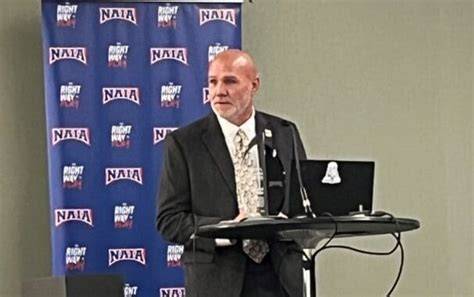
Quién fue Robert E. «Ish» Smith
CARY, N.C. - USA Baseball mourns the loss of former organization president Robert E. “Ish” Smith, who passed away on Wednesday at the age of 85. Smith was elected president of the United States Baseball Federation in 1980 and also served as the president of the International Baseball Federation for 12 years.
Robert E. "Ish" Smith was a former President of the International Baseball Federation and the United States Baseball Federation. As President of the International Baseball Association from 1981 to 1993, he is the person most credited with getting the sport of baseball accepted into the Olympic Games as an official gold medal sport.
Smith graduated from Greenville College in Greenville, Illinois in 1957 and went to work at the college a few years after graduation as a physical education instructor and baseball coach, in 1961. Smith began his work with the Olympics when he began to work on the United States Olympic Committee in 1977.
Presidencia de las organizaciones de béisbol
| Organización o función | Periodo |
|---|---|
| Federación de Béisbol de Estados Unidos | 1980-1989 |
| Federación Internacional de Béisbol | 1981-1993 |
| Comité Olímpico de Estados Unidos | Hasta 1990, en distintas funciones |
Smith was elected President of the United States Baseball Federation in 1980 (until 1989) and then quickly ascended to the presidency of the International Baseball Federation/International Baseball Association (IBA) the following year at the Baseball World Cup held in Japan.
Smith served as the president of the United States Baseball Federation from 1980-1989 and served as president for the International Baseball Federation from 1981-1993, where he coordinated 26 international baseball tournaments during his tenure.
At the IBA's Congress in 1988, held in conjunction with the Nicaragua Baseball World Cup, Smith was re-elected as President, and he held the office until 1993.
During Dr. Smith's time as international leader of amateur baseball, he coordinated 26 world baseball tournaments, continued to serve on the United States Olympic Committee in varying capacities until 1990, and directed the baseball competitions at the Olympic Games in 1984 in Los Angeles, 1988 in Seoul, and 1992 in Barcelona.
El camino del béisbol hacia los Juegos Olímpicos
Among his notable achievements in baseball, Smith is credited with baseball’s addition to the Olympic Programme as an official gold medal sport. He oversaw three Olympic Games baseball tournaments during his career, in Los Angeles 1984 and Seoul 1988 as a demonstration sport, and for the first time as an official gold medal sport in Barcelona 1992.
Smith is often acknowledged as being responsible for baseball becoming an official Olympic sport. He oversaw the winning of the first-ever gold medal for baseball, won by Cuba in Barcelona in 1992.
As President of the International Baseball Association from 1981 to 1993, he is the person most credited with getting the sport of baseball accepted into the Olympic Games as an official gold medal sport.
Los torneos olímpicos dirigidos por Smith
| Juegos Olímpicos | Ciudad | Condición del béisbol |
|---|---|---|
| 1984 | Los Ángeles | Deporte de demostración |
| 1988 | Seúl | Deporte de demostración |
| 1992 | Barcelona | Deporte oficial con medalla de oro |
El paso del béisbol de disciplina de demostración a deporte oficial con medalla de oro representó el principal logro institucional de Smith. Su trabajo no se limitó a dirigir una competición concreta, sino que estuvo relacionado con el desarrollo internacional del béisbol amateur y con su reconocimiento dentro del movimiento olímpico.
Reconocimientos y premios
He was awarded the Olympic Order, the highest honor given by the International Olympic Committee, for his efforts in bringing baseball to the Olympic Programme as a gold medal sport.
For these efforts, he was a recipient of the Olympic Order, the highest honor given by the International Olympic Committee (IOC).
Smith also received the American Baseball Coaches Association (ABCA)/Wilson Lefty Gomez Award in 1984 in honor of his contributions to the game of baseball. Smith was elected into the ABCA Hall of Fame in 1993.
Smith, a member of the NAIA Hall of Fame, was awarded the ABCA's highest honor, the ABCA/Wilson Lefty Gomez Award, in 1984 for his contributions to the game of baseball.
The NAIA Baseball Coaches Executive Committee created an award for baseball coaches and administrators, the "Robert E. Smith Achievement Award," with Smith as the first winner in 1999. The award honors "unselfish promotion of NAIA baseball."
Smith also won the Turley award, which is an award of service.
Formación y carrera en Greenville College
Smith graduated from Greenville College in Greenville, Illinois in 1957 and went to work at the college a few years after graduation as a physical education instructor and baseball coach, in 1961.
Smith served as a key development officer for Greenville College before being hired as Vice President for Institutional Advancement. While serving in that capacity, Smith was chosen by the GC Board of Trustees as the ninth President of Greenville College.
He retired in 1998 and has since worked with the Fellowship of Christian Athletes in southern Illinois.
As a lasting reminder of his contributions to the college, Greenville College plays its baseball games on Robert E. Smith Field.
Legado en el béisbol internacional
“Ish’s many successes in our sport helped lay the foundation for international baseball as we know it today,” said USA Baseball President Mike Gaski. “It is remarkable he was able to witness baseball’s return to the Olympic Programme for Tokyo 2020, honoring one of his most significant contributions to the game in his long, prosperous career.
We join the entire baseball world in mourning the passing of a founding father of the international game and will continue to celebrate his many years of service to our organization.”
El legado de Smith se relaciona principalmente con la expansión del béisbol fuera de Estados Unidos, la coordinación de competiciones internacionales y la consolidación de su presencia olímpica. La concesión de la Orden Olímpica situó su labor entre las contribuciones institucionales más importantes realizadas para que el béisbol alcanzara la condición de deporte olímpico oficial.
Historia del Beisbol en los Juegos Olímpicos narrado por Ender Chaparro Jr
El béisbol en la vida de Israel A. Smith
Story Behind the Historic Image: Israel A. Smith, Community of Christ president from 1946-1958, was an avid baseball player and fan. As a child growing up in Lamoni, he would have practiced his baseball skills with his older brothers in a field located near their home, Liberty Hall (as shown in image above).
While playing for the College City baseball team, Israel was known for being a "heavy hitter." He was also fairly good in his fielding skills as pitcher and first baseman.
Su padre, Joseph Smith III wrote to Lucy, Israel's sister, following a difficult loss to the Davis City team, "you could tell by the score that Israel had again played an almost faultless game at first base."
While serving as church president, Israel was known to take friends and new appointees to Kansas City Athletics games. Charles Neff, Community of Christ apostle, recalled that attending a game with President Smith was considered a special treat and one did not refuse.
However, the experience often meant arriving to the baseball park early and hearing Smith share all the details of the game such as player statistics, skills, etc. Neff recalled that it also meant leaving the game early, sometimes during the most exciting moments of the game in order to avoid traffic.
Garland Tickemyer, a church appointee assigned to southern California, remembered a time when President Smith was being interviewed by the Los Angeles Times during the 1950s. Smith struggled to answer questions about world events and the work of the church.
However, he bounced back quickly when the interviewer inquired about baseball. Tickemyer said that Israel "quickly responded and elaborately expanded on his thoughts of the current baseball season and predictions for the World Series."
One of his more treasured possessions was an autographed ball signed by "The Big Train" Walter Johnson, pitcher for the Washington Senators and among the first five inductees to the Baseball Hall of Famer at Cooperstown, New York in 1936.
tags: #presidente #smith #beisbol