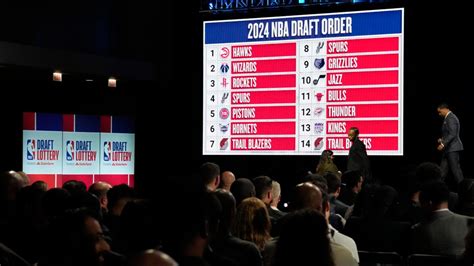
El Draft de la NBA es uno de los momentos más esperados año tras año por los aficionados de los equipos, que buscan conocer cuáles serán los novatos reclutados por sus divisas y las expectativas que se generan por las selecciones.
Las 30 franquicias de la liga eligen a sus próximos jugadores, los seleccionados en la primera ronda tienen contrato garantizado mientras que los de segunda ronda tienen que ganarse un puesto en el club.
A diferencia de lo que ocurre en los drafts de MLB y NFL, que ocupan múltiples rondas y varios días, el de la NBA transcurre en una sola jornada puesto que son sólo dos rondas y 60 selecciones en total.
El primer pick lo obtiene el conjunto que ganó la lotería que se realiza cada año. Muchas veces el elegido como número uno se convierte en una estrella y puede cambiar la historia de determinada divisa.
Algunas clases del Draft de la NBA han dejado su huella en la historia, mientras que otras no han cumplido con las expectativas y han sido una gran decepción para los equipos involucrados en los primeros puestos.
Cabe también recordar que los clubes pueden incluir en sus cambios de jugadores selecciones del Draft, lo que hace mucho más llamativos los movimientos entre los clubes.
La calidad de una generación no depende únicamente del jugador elegido con el primer pick. En muchas ocasiones, las grandes clases se construyen con estrellas seleccionadas en posiciones intermedias o incluso al final de la primera ronda.
Cómo se puede valorar una clase del Draft
La 2026 NBA draft class is expected to be one of the most stacked in recent history. That's a great excuse to look back on some of the best we've seen to date.
We combed through every NBA draft class since 1947 (when it wasn't even called the NBA!) and tallied each group's All-Star appearances, All-NBA nods, MVPs, Finals MVPs and career win shares (since that's the only cumulative catch-all that stretches back to the beginning of the league).
We awarded points for the accolades (one for All-Star, three for All-NBA, five for MVP and five for Finals MVP) and then sorted all 79 classes by the average of their ranks in accolade points and win shares, with a little extra weight given to the accolade points.
Some of the results may surprise you, but the list generally passes the sniff test. And by the time we get toward the top, you'll be blown away by the amount of talent packed into some of these groups.
| Clase | Figuras principales | Rasgo destacado |
|---|---|---|
| 1984 | Hakeem Olajuwon, Michael Jordan, Charles Barkley, John Stockton | Talento acumulado |
| 1985 | Patrick Ewing, Karl Malone, Chris Mullin, Joe Dumars | Gran variedad de jugadores estelares |
| 1996 | Allen Iverson, Kobe Bryant, Ray Allen, Steve Nash | Estrellas y carreras legendarias |
| 2003 | LeBron James, Carmelo Anthony, Chris Bosh, Dwyane Wade | Cuatro superestrellas |
| 2009 | Blake Griffin, James Harden, Stephen Curry, DeMar DeRozan | Relevo de los MVP |
Draft de 1984: Olajuwon, Jordan, Barkley y Stockton
Hasta 2003, el Draft de 1984 era considerado sin ningún tipo de duda como el mejor de toda la historia.
La sola presencia de Michael Jordan ya le guarda un lugar de privilegio en la hemeroteca NBA.
La clase de 1984 quedará para la historia por la selección de Michael Jordan por los Chicago Bulls en el puesto número tres.
Es un tanto irónico que el que es considerado como el mejor jugador de todos los tiempos no haya sido seleccionado en el pick uno y esa razón tiene nombre y apellido: Hakeem Olajuwon, quien se llevó el primer lugar.
Sin embargo, lejos de la infinita figura de 'Air Jordan', que curiosamente fue elegido en el número 3, aparecen nombres de impacto como el número 1 Hakeem Olajuwon o el irreductible Charles Barkley (5).
Hay otros jugadores memorables de ese año, como Charles Barkley en la quinta selección o el base John Stockton, quien fue escogido en la posición 15 de ese año.
Leyendas de la liga que también tuvieron que esperar al número 16 para que otro ilustre como John Stockton apareciera con unos Utah Jazz que tuvieron premio a su espera 'pescando' al futuro máximo asistente y recuperador de la historia de la NBA.
Para muchos, ha sido la mejor selección de la historia por el talento acumulado.
Los nombres que definieron 1984
- Hakeem Olajuwon fue elegido en el primer puesto.
- Michael Jordan llegó a los Chicago Bulls con la tercera selección.
- Charles Barkley fue escogido en el quinto puesto.
- John Stockton apareció en la primera ronda, en la posición 15 según el registro general de la clase.
Największy błąd w historii koszykówki | Ranking NBA DRAFT 1984
Draft de 1985: Patrick Ewing y Karl Malone
Otra cosecha a la altura de las mejores se daría al año siguiente donde Pat Ewing lideraría un Draft NBA que también acabaría contando con All Stars de renombre como Terry Porter o Chris Mullin, o incluso con el MVP de las finales de 1990 Joe Dumars (Detroit Pistons).
Otra de las que es considerada como una de las mejores selecciones del Draft también ocurrió en la década de los 80.
Hay grandes nombres en 1985, con las selecciones de Patrick Ewing (1), Charles Oakley (9) y Karl Malone (13).
Hay otros nombres memorables, como Chris Mullin (7) y Joe Dumars (18), entre otros.
Aunque sin duda, tras Ewing, el gran nombre que también quedaría grabado para la historia del Draft 1985 fue el de Karl Malone.
El mítico pivot de los Utah Jazz fue elegido en el número 13 para acabar siendo MVP de la liga hasta en dos ocasiones formando una pareja legendaria en Salt Lake City junto al base John Stockton.
Para muchos, es la mejor selección de la historia, por la gran variedad de jugadores estelares que dejó.
Una generación con profundidad
La importancia de 1985 no se limita a su primera elección. Patrick Ewing encabezó la clase, pero Karl Malone, elegido en el número 13, terminó convirtiéndose en uno de los jugadores interiores más dominantes de la historia.
La presencia de Charles Oakley, Chris Mullin y Joe Dumars amplió todavía más el valor de una generación capaz de producir estrellas, campeones y jugadores decisivos en ambos lados de la cancha.
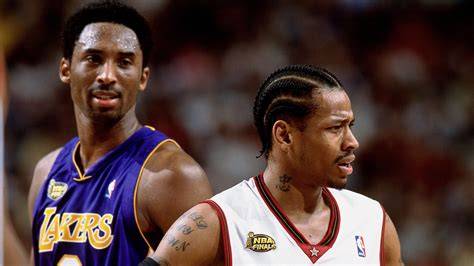
Draft de 1996: Iverson como número uno y Kobe Bryant en el puesto 13
El Draft de 1996 propiciaría el desembarco en la NBA de algunas de sus grandes estrellas y referentes del futuro.
En aquel sorteo allá por la década de los noventa apareció con el número uno Allen Iverson.
'The Answer' llegó a Philadelphia para marcar una época que acabaría llegando a su cénit en 2001 con la disputa de la final de la NBA ante los Lakers.
En el Draft de 1996 se realizaron 58 selecciones, pero quien realmente brilló no fue la primera elección, sino un joven de Philadelphia: Kobe Bryant, quien fue elegido en el puesto 13.
Precisamente en los Lakers se fraguó la figura eterna de otro integrante de este Draft.
El equipo de Los Ángeles apalabró el traspaso de Vlade Divac con los Hornets días antes del Draft y desde Charlotte llegaría en el puesto número 13 un jovencísimo Kobe Bryant que acabaría convirtiéndose en leyenda.
Lamentablemente falleció, pero Bryant construyó una carrera legendaria con cinco campeonatos y 18 participaciones en el All-Star.
Otros jugadores ilustres como Marcus Camby (2), Marbury (4), Ray Allen (5), Stojakovic (14), Steve Nash (15) o Derek Fisher (24) fueron algunas de las estrellas que compartieron aquel draft de 1996.
Ese año también dejó otros nombres memorables como Allen Iverson (número 1), Steve Nash (15), Ray Allen (5) y Derek Fisher (24).
Es considerada como una de las mejores camadas de jugadores en la liga.
Una clase repleta de futuras leyendas
| Jugador | Selección |
|---|---|
| Allen Iverson | 1 |
| Marcus Camby | 2 |
| Ray Allen | 5 |
| Kobe Bryant | 13 |
| Peja Stojakovic | 14 |
| Steve Nash | 15 |
| Derek Fisher | 24 |
Draft de 2003: LeBron James y su séquito
Sería difícil entender la actual NBA sin echar la vista atrás doce años para recordar la elección de Lebron James como número 1 de 2003.
El 2003 dio paso al máximo anotador de todos los tiempos, así que hay que considerar esa selección como una de las mejores.
LeBron James fue elegido en el primer pick del Draft por los Cleveland Cavaliers y el resto es historia.
De aquella lista de jugadores saldrían cuatro superestrellas que marcarían tendencia en la NBA durante los siguientes años de su carrera.
Tras Lebron, aparecieron los Carmelo Anthony (3), Chris Bosh (4) o Dwyane Wade (5) que rápida alcanzarían la consideración de All Star con total unanimidad.
Pero no solo su talento fue seleccionado.
Carmelo Anthony ocupó el puesto 3, Chris Bosh fue seleccionado en el 4, Dwyane Wade fue elegido en el puesto 5 y David West en el 18.
De ellos, todos excepto Carmelo, han sido capaces de proclamarse campeones de la NBA - curiosamente compartiendo vestuario en los Miami Heat -.
La clase de 2003 destaca por la concentración de talento en los primeros puestos. LeBron James, Carmelo Anthony, Chris Bosh y Dwyane Wade terminaron convirtiéndose en referencias de la liga y en protagonistas de distintas etapas competitivas.
Los principales integrantes de 2003
- LeBron James fue la primera selección de los Cleveland Cavaliers.
- Carmelo Anthony fue elegido en el puesto 3.
- Chris Bosh ocupó la cuarta selección.
- Dwyane Wade fue seleccionado en el quinto puesto.
- David West apareció en el puesto 18.
Największy błąd w historii koszykówki | Ranking NBA DRAFT 1984
Draft de 2009: el relevo de los MVP
Noticias relacionadas
La lucha por el MVP de la temporada 2014/2015 no se entendería sin el Draft de 2009 desde donde hicieron su salto a la NBA tanto Stephen Curry como James Harden.
El base de los Warriors fue elegido en el número 7 mientras que Harden ocuparía el puesto número 3.
En ese Draft, Blake Griffin sería el número uno de una lista en la que destaca la irrupción en el cinco de Ricky Rubio.
El 2009 es considerado como el último gran draft de la NBA.
En esa selección emergieron figuras clave de los equipos protagonistas de la temporada 2014-2015, incluyendo a grandes referentes como Stephen Curry (selección 7) y James Harden (selección 3), quienes brillaron con los Golden State Warriors y los Houston Rockets, respectivamente, cautivando a los fanáticos.
También sobresalieron otros talentos como Ricky Rubio (5), Blake Griffin (1), DeMar DeRozan (9) y Jordan Hill (8).
Una clase con estrellas en distintos puestos
| Jugador | Selección |
|---|---|
| Blake Griffin | 1 |
| James Harden | 3 |
| Ricky Rubio | 5 |
| Stephen Curry | 7 |
| Jordan Hill | 8 |
| DeMar DeRozan | 9 |
Otras clases destacadas por sus estadísticas y profundidad
Clase de 1960
The 1960 class doesn't have the depth you'll find in most of the other groups in these rankings, but the talent at the top is undeniable.
The first overall pick, Oscar Robertson, averaged a triple-double in his second season, won MVP in his fourth, led the league in assists per game seven times and had one scoring title.
Believe it or not, he might not even be the best player drafted in 1960.
The second pick, Jerry West, also won both a scoring and assist title.
He never won a regular-season MVP, but he finished in the top six in MVP voting nine times.
And he won the first-ever Finals MVP award.
Add Lenny Wilkens, Tom Sanders, Al Attles and Darrall Imhoff to those two, and it's not hard to see how this group cracked the top 25.
Clase de 1981
The 1981 class is loaded with All-Stars who never quite reached superstar status, including Buck Williams, Larry Nance, Rolando Blackman and heat-check scorer Danny Ainge.
Several of them spent time as their teams' primary scoring option.
But they didn't have the sustained greatness that you'll see from some others higher in these rankings.
The face of the class, Isiah Thomas, followed a similar trajectory.
He was out of the league after his age-32 campaign, but he was absolutely a superstar and a perennial All-NBA player at the peak of his powers.
Over his first seven playoff appearances, a run that culminated with back-to-back championships and one Finals MVP, Thomas put up 21.7 points, 9.0 assists and 2.3 steals in 93 playoff games.
Clase de 1949
The 1949 draft was the last before the league rebranded from the BAA to the NBA, so it gets a small boost for being in the league's formative years.
Back then, the league had about a third as many teams as it has today, but it still featured at least 10 All-Stars per year.
The math is obvious: All-Star teams were easier to make.
But the 1949 class still has seven multi-time All-Stars, including five who made at least six different All-Star teams, which is impressive.
And honoring early trail blazers like Slater Martin, Harry Gallatin, Ed Macauley, Dick McGuire and Vern Mikkelsen feels like the right call.
Clase de 1950
In 1950, another all-time class gave us Paul Arizin, Bob Cousy, Bill Sharman, Larry Foust and George Yardley.
Cousy, known as the Houdini of the Hardwood, was one of the game's first great innovators with the ball in his hands.
Highlight reels of his dribbling are staples of early looks at the league.
And it wasn't just style.
Cousy led the league in assists eight times, won an MVP in 1956-57 and won six championships with the Boston Celtics.
Arizin won the title one year earlier than Cousy, won two scoring titles during his career and made an All-Star team in every season he played.
Sharman was a teammate of Cousy's.
They won four championships together, and Sharman led the league in free-throw percentage seven times.
Clase de 1978
The 1978 draft produced a deep and talented class that included Maurice Cheeks, Reggie Theus, Mychal Thompson, Michael Ray Richardson and Michael Cooper.
Cheeks was a defensive ace and one of the great distributors of his era.
Theus averaged at least 18 points in nine of his 13 seasons.
Michael Cooper was one of the best defenders of all time.
Richardson led the NBA in steals per game three times.
And Thompson, the first overall pick, won two championships as a crucial role player for the Los Angeles Lakers of the late 1980s.
But the driving force behind this class rising as high as it did is undoubtedly the player who went sixth.
By the time he retired, Larry Bird was eighth in NBA history in career win shares.
He won three straight MVPs from 1984 through 1986, finished in the top three of MVP voting in eight straight seasons from 1981 through 1988 and won three championships with the Boston Celtics.
Clase de 1977
One year before Larry Bird entered the NBA, a Celtics teammate who won a Finals MVP over him was taken 12th overall.
Cedric Maxwell is responsible for those five accolade points after averaging 17.7 points, 9.5 rebounds and 2.8 assists in the 1981 Finals.
But the 1977 class climbing one spot higher than Bird's has more to do with several others drafted around him.
Jack Sikma was a seven-time All-Star who helped lead the Seattle SuperSonics to a championship in 1979.
Marques Johnson made five All-Star teams and averaged more than 20 points per game in six different seasons.
Walter Davis was one of the league's more consistent scorers throughout his career.
Bernard King won a scoring title as a New York Knick before an injury derailed his career.
Norm Nixon was the point guard who helped Magic Johnson transition into the NBA.
And Tree Rollins was a game-changing rim protector in an era with some of the best shot-blockers of all time.
Clase de 2014
Before the 2014 class hit the NBA, players like Andrew Wiggins and Jabari Parker were projected to be superstars, but neither is largely responsible for this ranking.
That honor goes to Nikola Jokić, the 41st overall pick who went to average a triple-double twice and win three MVPs and one Finals MVP before exiting his prime.
He didn't drag the 2014 class to this spot by himself, though.
Joel Embiid's MVP certainly helped.
And players like Clint Capela, Julius Randle, Aaron Gordon, Wiggins and Marcus Smart all having solid careers contributed plenty to the win shares column.
Clase de 1974
Forty years before the Denver Nuggets took Nikola Jokić, another player who eventually destroyed predraft expectations was picked in the 40s.
After spending his first few seasons in the ABA, George Gervin transitioned to the NBA and won four scoring titles.
He finished in the top six of MVP voting in five straight seasons.
And to this day, the Iceman is considered one of the best scorers in league history.
But he isn't solely responsible for the 1974 class elevating to this spot.
No. 5 overall pick Bobby Jones made five All-Star teams and helped the Philadelphia 76ers win the championship in 1983.
No. 11 pick Jamaal Wilkes won a title with the Golden State Warriors and three more with the Lakers.
And before injuries sent his career on a different trajectory, No. 1 overall pick Bill Walton won an MVP, a Finals MVP and a championship.
Clase de 1970
The 1970 class was largely carried by a pair of legendary big men, but there's plenty of depth here as well.
Dave Cowens was an MVP and two-time champion who averaged 19.1 points, 15.5 rebounds and 3.8 assists over his first six seasons.
Meanwhile, Bob Lanier had an eight-year peak in which he put up 23.9 points, 12.5 rebounds, 3.5 assists and 2.0 blocks per game.
But again, they weren't alone.
The 1970 draft class featured other Hall of Famers, including Calvin Murphy, Tiny Archibald, Dan Issel, Rudy Tomjanovich and Pistol Pete Maravich.
Clase de 2005
The 2005 class is headlined by a pair of playmakers who gave us one of the best "who you got?" debates in NBA history.
Deron Williams and Chris Paul were taken third and fourth overall, respectively.
They went on to battle for the "best point guard in the league" title for years.
CP3 ultimately won that debate and played all the way through the 2025-26 season.
He's now fifth in NBA history in career win shares.
But when you comb through the names in this class, those are far from the only two that stand out.
No. 10 overall pick Andrew Bynum was a key cog on two Lakers championship teams.
Monta Ellis (No. 40), Danny Granger (No. 17) and Lou Williams (No. 45) all had long runs as high-level scorers.
David Lee (No. 30), Marvin Williams (No. 2), Raymond Felton (No. 5) and Channing Frye (No. 8) were reliable role players for years.
And the first overall pick, Andrew Bogut, helped establish the Golden State Warriors' dynasty.
Clase de 2001
This is maybe the biggest surprise of this entire exercise.
The 2001 class has long been considered one of the worst in league history, but that may simply be because of the top pick.
With career averages of 6.6 points and 5.5 rebounds, Kwame Brown is generally seen as one of the biggest busts of all time.
But several players taken outside this draft's top five had long-and in some cases, Hall of Fame-worthy-careers.
Pau Gasol (No. 3 overall) won multiple titles with the Lakers.
Tony Parker (No. 28) was a Finals MVP.
Tyson Chandler (No. 2) was the anchor of the Dallas Mavericks' title-winning defense.
Joe Johnson (No. 10), Gilbert Arenas (No. 31), Zach Randolph (No. 19), Gerald Wallace (No. 25) and Mehmet Okur (No. 38) all made All-Star teams.
And several others, including Richard Jefferson (No. 13), Shane Battier (No. 6) and Jason Richardson (No. 5) had long, successful careers as role players or fringe stars.
Clase de 1969
A few of the classes featured in these rankings are largely driven by one player.
The 1969 class certainly qualifies as one of those.
Kareem Abdul-Jabbar, the first overall pick, is second in NBA history in career win shares.
He won six MVPs, six championships, two scoring titles, one rebounding title and four block titles while averaging 28.1 points, 14.1 rebounds, 4.4 assists, and 3.4 blocks over the first 12 years of his career.
With all due respect to Bob Dandridge and Jo Jo White, both of whom are Hall of Famers, Kareem's resume is how this draft class pushed its way into the top 15 of these rankings.
Clase de 2007
The gap between this class' best and second-best players isn't quite as wide as the one for 1969, but it's still pretty big.
Kevin Durant is a two-time Finals MVP who's fifth in NBA history in career points scored and is one of the greatest pure scorers ever.
His 17 seasons with at least 500 minutes and 25-plus points per game trail only LeBron James' 20.
He's five seasons clear of third-place Kobe Bryant, Karl Malone and Michael Jordan.
But again, KD doesn't have quite as much separation from his classmates as Kareem did from his.
The 2007 draft also gave us longtime NBA contributors Al Horford, Mike Conley, Marc Gasol and Joakim Noah, among others.
Clase de 2008
This is another star-studded class with several players still in the league today.
The top three (Derrick Rose, Michael Beasley and OJ Mayo) sort of flamed out in different ways, although Rose won an MVP before injuries took their toll.
But at least two players taken later than those three (Russell Westbrook and Kevin Love) figure to make their way into the Hall of Fame one day.
And several others from this class had long and successful careers as role players or fringe stars.
That list includes DeAndre Jordan (No. 35), Brook Lopez (No. 10), Nicolas Batum (No. 25), Serge Ibaka (No. 24), George Hill (No. 26), Danilo Gallinari (No. 6), Goran Dragić (No. 45), Ryan Anderson (No. 21), Eric Gordon (No. 7) and Roy Hibbert (No. 17).
Clase de 1979
In case the debate about Magic Johnson and Larry Bird needed any more fodder, the Magic camp can add "higher in Bleacher Report's all-time draft class rankings!" to their repertoire.
Johnson is the biggest reason why the 1979 class is knocking on the door of the top 10.
He won three MVPs and three Finals MVPs.
For his career, he averaged 19.5 points and 11.2 assists.
And he was an All-Star in all but two of his 13 NBA seasons.
He was far from the only difference-maker in his draft class, though.
No. 65 overall pick Bill Laimbeer won two championships and made four All-Star teams.
Sidney Moncrief (No. 5) was a two-time Defensive Player of the Year.
Mark Eaton (No. 107) won four block titles and is the all-time leader in career blocks per game.
And Vinnie Johnson (No. 7) is one of the most prolific reserve scorers ever.
Clase de 1992
There are several longtime, high-level role players and at least one other star in this group, but the 1992 class owes much of the credit for its top-10 spot to No. 1 overall pick Shaquille O'Neal.
During his threepeat with the Lakers, Shaq averaged 35.9 points, 15.2 rebounds, 3.5 assists and 2.9 blocks in 15 Finals games.
He unsurprisingly won all three Finals MVPs from those seasons and has to be considered one of the best playoff performers of all time.
But again, this class has some depth as well.
No. 2 overall pick Alonzo Mourning made seven All-Star teams.
Robert Horry (No. 11) won seven titles.
And P.J. Brown (No. 29), Christian Laettner (No. 3), Latrell Sprewell (No. 24), Doug Christie (No. 17), Tom Gugliotta (No. 6), Jim Jackson (No. 4) and Hubert Davis (No. 20) all had success all over the league.
Por qué algunas clases superan a otras
Las mejores clases suelen combinar una figura histórica con varios jugadores capaces de sostener carreras largas y exitosas.
La clase de 1984 reúne a Hakeem Olajuwon, Michael Jordan, Charles Barkley y John Stockton.
La de 1996 combina a Allen Iverson y Kobe Bryant con Ray Allen, Steve Nash y Derek Fisher.
La de 2003 concentra en los primeros puestos a LeBron James, Carmelo Anthony, Chris Bosh y Dwyane Wade.
La de 2009 demuestra que una generación también puede alcanzar gran valor cuando sus mejores jugadores aparecen fuera de las primeras selecciones: Stephen Curry fue elegido en el número 7 y James Harden ocupó el puesto número 3.
Las clases históricas también muestran que el rendimiento de un jugador no siempre coincide con el orden en que fue seleccionado. Kobe Bryant llegó en el puesto 13, Karl Malone fue elegido en el número 13, Nikola Jokić apareció como la selección 41 y Mark Eaton fue escogido en el número 107.
Por eso, el análisis de una generación debe considerar tanto el impacto de las primeras elecciones como la profundidad de toda la camada, la duración de las carreras, los premios individuales, los campeonatos y la producción acumulada.